Expertise Areas
Technology & Realization
I entered the master’s with confidence in building physical prototypes, since I already had developed prototyping and crafting skills during the bachelor. However, my perspective on Technology & Realization has shifted over time. Rather than seeing realization as the final stage of a project, I now increasingly use it as an essential part of my design process that generates valuable insights and uncovers opportunities and limitations that are difficult to identify through conceptual exploration alone. I also used my development in fabrication and knowledge of software to create integrated systems, rather than stand-alone prototypes.
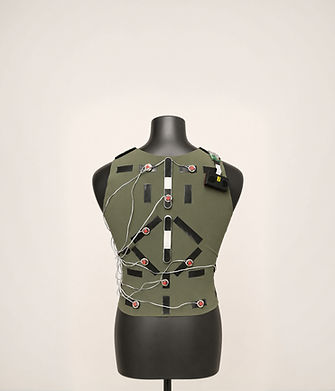
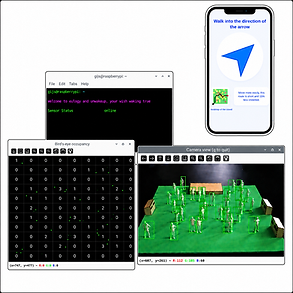
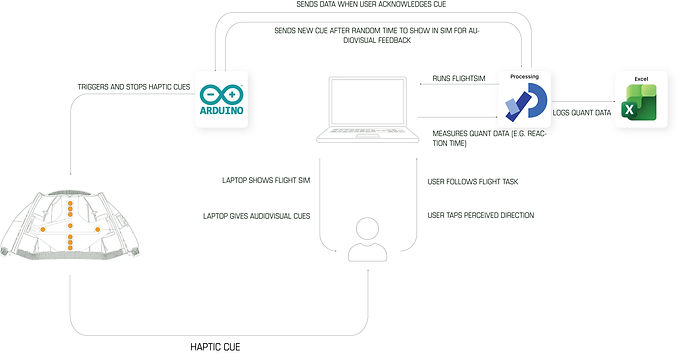
This development becomes visible in the increasing complexity and integration of my projects. With pAthfInder, I contributed to the realization of an AI-driven navigation system that combined crowd detection, pathfinding algorithms and explainable AI into a functioning proof of concept. My task during this project was to both realize the crowd detection part, and integrating it with the other parts of the system. During the NELO project, I combined computer vision with parametric design and 3D printing to translate office activity data into physical artifacts. During DUIET, I integrated haptic hardware (Feelix motor) with Processing to create an interactive system that allowed users to experience dynamic electrical circuits through touch. My Final Master Project further strengthened these skills through the development of a wearable haptic feedback system, requiring the integration of electronic circuits with garment construction and software to create a functional and experiential testing environment.
Through these projects, I became confident in combining different technologies and independently solving technical challenges. At the same time, iterative prototyping became one of my most valuable design tools. An example of where this first started was during Constructive Design Research, where we explored multiple versions of closing mechanisms for a soft robotic blood pressure cuff. This showed me the value of rapid experimentation, testing and refining for informed decision-making.
WEARABLE ELECTRONICS INTEGRATION
SUZANNE LEANDER

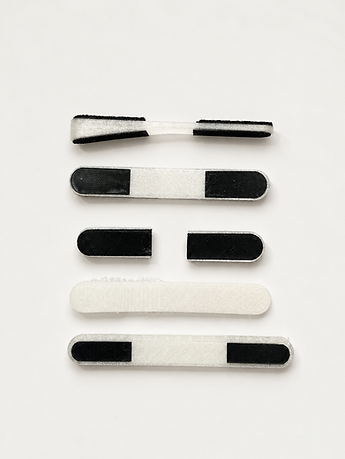
TPU SPINE MODULE EXPLORATION
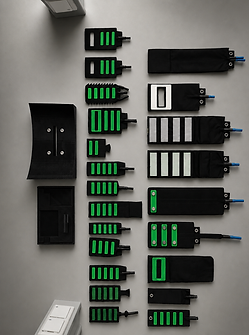
SOFT ROBOTIC BLOOD PRESSURE CUFF ITERATIVE PROTOTYPING
MODULAR HAPTIC FEEDBACK TESTING PROTOTYPE

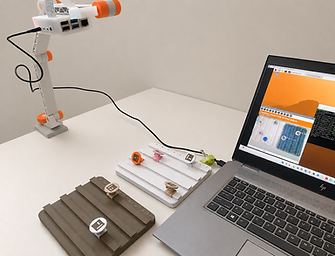
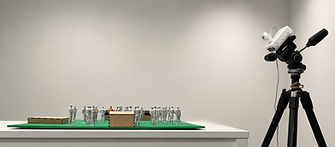
HAPTIC FEEDBACK THROUGH ELECTRONIC CIRCUIT
ARUCO MARKER CALM TECHNOLOGY SCHEDULER
AI CROWD NAVIGATION TOOL WITH COMPUTER VISION
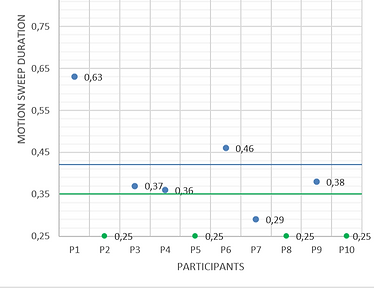
HAPTIC MOTION SWEEP SPEED THRESHOLD TEST
PATHFINDER (WEBAPP + OBJECT DETECTION + PATHFINDING ALGORITHM)
Math, Data & Computing
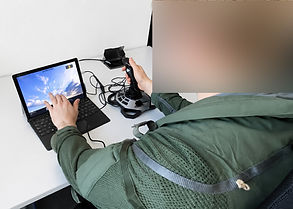
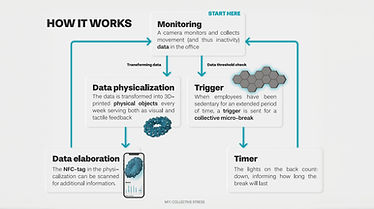
NELO SYSTEM ARCHITECTURE
AXON FINAL TESTING SETUP TO GATHER QUANT DATA (E.G. REACTION TIME)
AXON SYSTEM ARCHITECTURE
I already had developed a foundation in programming and computational design, mainly during my Final Bachelor Project, but during the master’s I started using data and computational tools more as design material capable of generating insights and shaping interactions, rather than just using it to develop prototypes.
A key aspect of this has been my ability to work with data throughout the entire design process. I learned how to determine which data is relevant, how it can be collected and how to process it into something meaningful, either for users or for future design decisions. At the same time, I became critical of the limitations of data. Specifically in my M12 and FMP, I tried to support quantitative data with qualitative observations and user feedback to gain a more complete understanding of a design challenge.
I also became more comfortable with computational methods and technologies. Whether it was was exploring computer vision techniques, AI-driven systems, parametric mesh design or new programming libraries, I gained confidence in acquiring technical knowledge and applying it to design focused challenges. The projects I worked on enabled me to move more and more towards a problem solving and computational thinking mindset, since breaking down complex challenges into smaller components and working on them individually became a necessary part of my workflow.
As a result, I have developed from a designer who uses data and computational tools to realize ideas into one who uses it to explore opportunities, generate insights and guide design decisions.
AXON USABILITY TEST IN SIMULATOR


User & Society
Throughout the master’s, my perspective of User & Society evolved from primarily addressing immediate user needs or usability challenges into understanding why people behave in certain ways, how they assign meaning to interactions, how design can influence behaviour over time and how to use that knowledge to inform design decisions.
Opposed to my bachelor, much of my master’s work has focused on gathering and interpreting user data and insights. By combining interviews, observations, user testing, thematic analysis and quantitative evaluation methods, I learned that users more often than not behave in unsuspected ways.
Therefore, I believe that design decisions should be grounded in both measured outcomes and human experiences. After all, we are designing for users, not ourselves. This has helped me become more critical of my own design decisions and assumptions, and more attentive on the details that influence user behaviour.
An early example of this became evident during the course DCM110, where the goal was to design for IoT systems with user interaction as a focal point. Reflecting on concepts such as affordances, embodiment, and feedforward made me more aware of how seemingly small design decisions can influence user behaviour and shape the way people understand and interact with a system. Furthermore, my FMP in particular highlighted the importance of understanding how people naturally perceive and assign meaning to interactions. Rather than designing based on technical assumptions or predefined interpretations, I explored how users intuitively understood certain haptic cues, emphasizing the value of designing around user experiences.
Although a key aspect of my work has been to base design decisions directly on user needs, I also try to look beyond the immediate interaction between user and product. Through projects focused on well-being, social innovation and human-computer interaction, I have become more aware of how design can influence behaviour, support long-term change and affect groups or communities, rather than just individuals. Extracurricular courses such as Environmental Psychology and Ethics of Technology broadened my understanding of how people interact with both technology and their environment. These courses encouraged me to consider the behavioural, environmental, and societal implications of design decisions beyond the immediate user experience.
As a result, I have developed a stronger ability to balance technological possibilities with user needs, enabling me to create solutions that are not only functional, but also meaningful and relevant withing their social context.
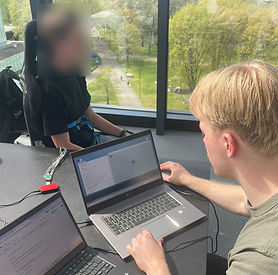


AXON VIBRATION PATTERN TESTING
PROSPECT REFUGE CHAIR ENVIRONMENTAL PSYCHOLOGY
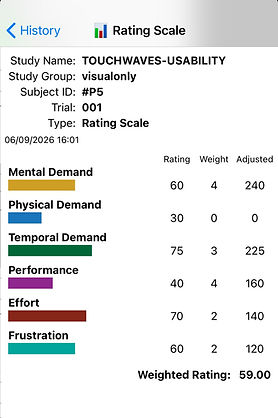
NASA TLX PARTICIPANT SCORES
M12 AGENCY PERSONAS
AXON TPU MOTOR HOUSING
NELO PHYSICALIZATIONS


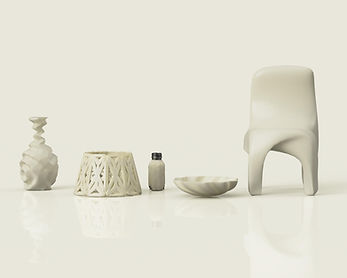
M12 AI ASSISTED 3D MODELLING RESULTS


M12 CHAIR ALTERATION THROUGH LLM PROMPT ('MAKE THIS CHAIR LOOK MORE ORGANIC')
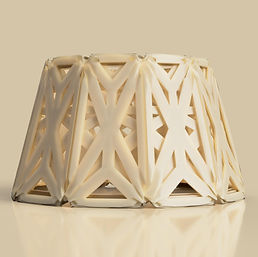
M12 LAMP SHAPE ALTERATION
IoT COFFEE PROTOTYPE
Creativity & Aesthetics
Throughout the Master’s, my focus gradually shifted towards more technical projects, where computation and the interaction between hardware and software became increasingly more significant. As a result, Creativity & Aesthetics became less centred around the visual design of products and more focused on how design can enhance user interaction and experience. Rather than exploring and pursuing aesthetics as the main focal point, I primarily used it as a tool to make complex systems and data more understandable, engaging and meaningful.
This development is visible in projects such as NELO, where we explored how office activity data could be translated into physical artifacts to facilitate reflection about collective stress. The main challenge was not only to create visually appealing forms, but also to design artifacts that represented data in an interpretable way to foster reflection and discussion. Through multiple steps and iterations, I learned how to develop parametric shapes that instantly translate numerical activity data into an artifact that influences the way in which people interpret information about their well-being.
Similarly, during my Final Master Project, creativity was expressed through the design of intuitive haptic interactions rather than visual aesthetics. I explored how vibration patterns could communicate spatial information and how users naturally interpret those vibrotactile cues. This introduced me to a broader understanding of aesthetics, extending beyond visual and auditory experiences and into the world of tactile interactions, where meaning and information are communicated in fundamentally different ways.
Furthermore, I have also explored creativity from a different perspective, by researching how AI could support designers during creative exploration, specifically during 3D modelling, by adding a natural language prompt component. Rather than focusing on the final aesthetic outcome, I examined how varying levels of AI agency could influence ideation and design decision-making. This changed my understanding on how creativity can shift from an individual process towards a collaborative process between human and machine, and how different factors can have an influence on the outcome.
While Creativity & Aesthetics has become less central to my design identity than some other Expertise Areas, it remains a fundamental component of my work. I apply it to shape how my projects are perceived, understood and experienced, allowing systems to become more accessible and meaningful to users.
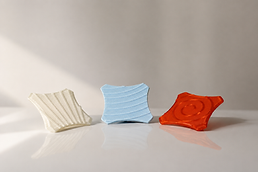
IoT 3D PRINTED SLIDERS WITH EMBOSSED FEEDFORWARD
POSTNL CASE INTERVENTION TIMELINE
NELO STAKEHOLDER MAP
Business & Entrepreneurship
One of my personal challenges has been to look beyond developing a technically feasible or socially relevant design, and understanding how concepts fit withing organizational and economic contexts. That is the reason why many of my electives during the master’s fell within the Design Leadership & Entrepreneurship track.
A lot of the focus in these courses revolved around stakeholder interaction, logistics, future interventions for real companies and assessing the feasibility of your own ideas. This made me relfect more on whether my designs could realistically be implemented and sustained. Feedback and presentations from product owners, leaders of innovation teams and Industrial Design alumni turned CEO’s repeatedly highlighted challenges that I would not have naturally prioritized.
While Business & Entrepreneurship is not the primary focus of my expertise, it has become an increasingly important perspective within my work, particularly through collaborations with external stakeholders and my experience in a startup environment. It allows me to better assess the viability of concepts and supports my ambition to develop systems that can create meaningful impact, beyond the prototyping stage.
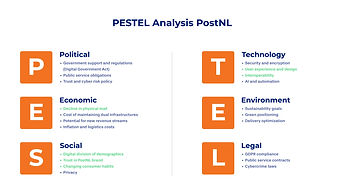



POSTNL PESTEL ANALYSIS
UTEMARU COMPETITOR ANALYSIS
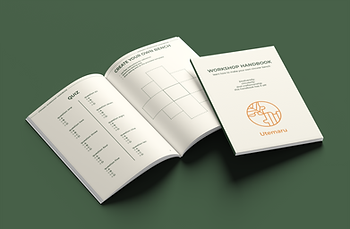
UTEMARU STAKEHOLDER INTERVENTION BOOKLET
DESIGN ENTREPRENEURSHIP CONSULTANCY LOGO
PI&V Development
Looking back at my PI&V at the end of my bachelor/start of my master’s, many of my core motivations have remained the same. I am still driven by designing for the improvement of people’s well-being, mental/physical performance and creating meaningful connections between people and their environment. However, I would say that throughout the master’s my perspective has broadened considerately. Rather than focusing primarily on sports and physical activity, I became increasingly interested in how interaction design can help people understand information and data to make informed decisions or enable them to act upon insights in meaningful ways. As a result, my identity and vision has evolved from designing solely for behavioural change towards designing interactive systems that bridge the gap between information and human understanding.
MAX REINERS
Professional Skill Development
Through collaborating with external stakeholders, experts, multidisciplinary teams and real-world cases, I have become significantly more confident in communicating my ideas, presenting design decisions and incorporating feedback in my work. These experiences have helped to move from a technically-oriented designer to a more well-rounded one, who is able to balance technical, human and organizational aspects of a design project.